Why Choose a Self-Drive Tour
- Freedom, without the planning.
The appeal of self-drive is the freedom. The reason people hesitate is the admin — working out the route, the distances, which lodges are worth it, whether you’ll make the gate in time. We’ve done that part. Your accommodation, excursions and park entries are booked and confirmed. You just drive.
- You set the pace.
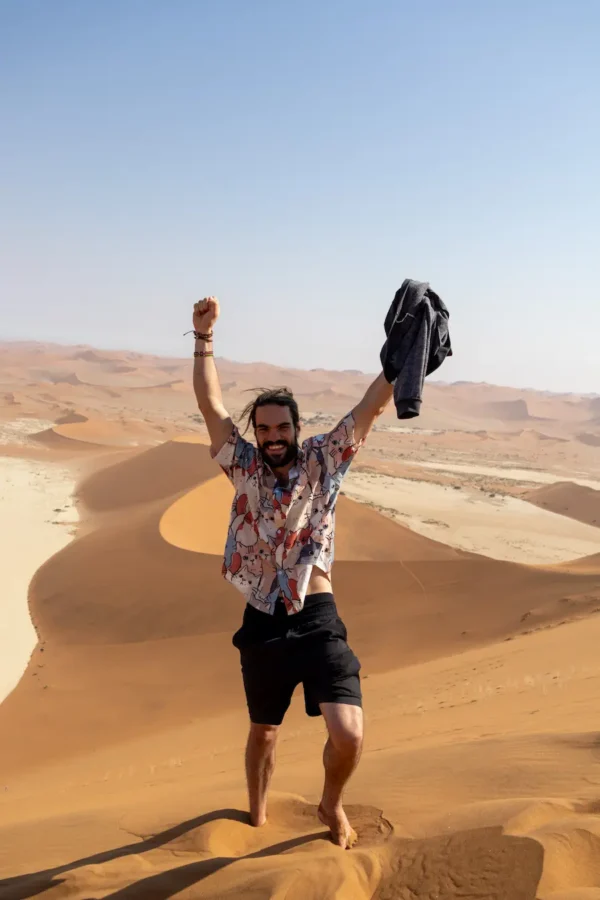
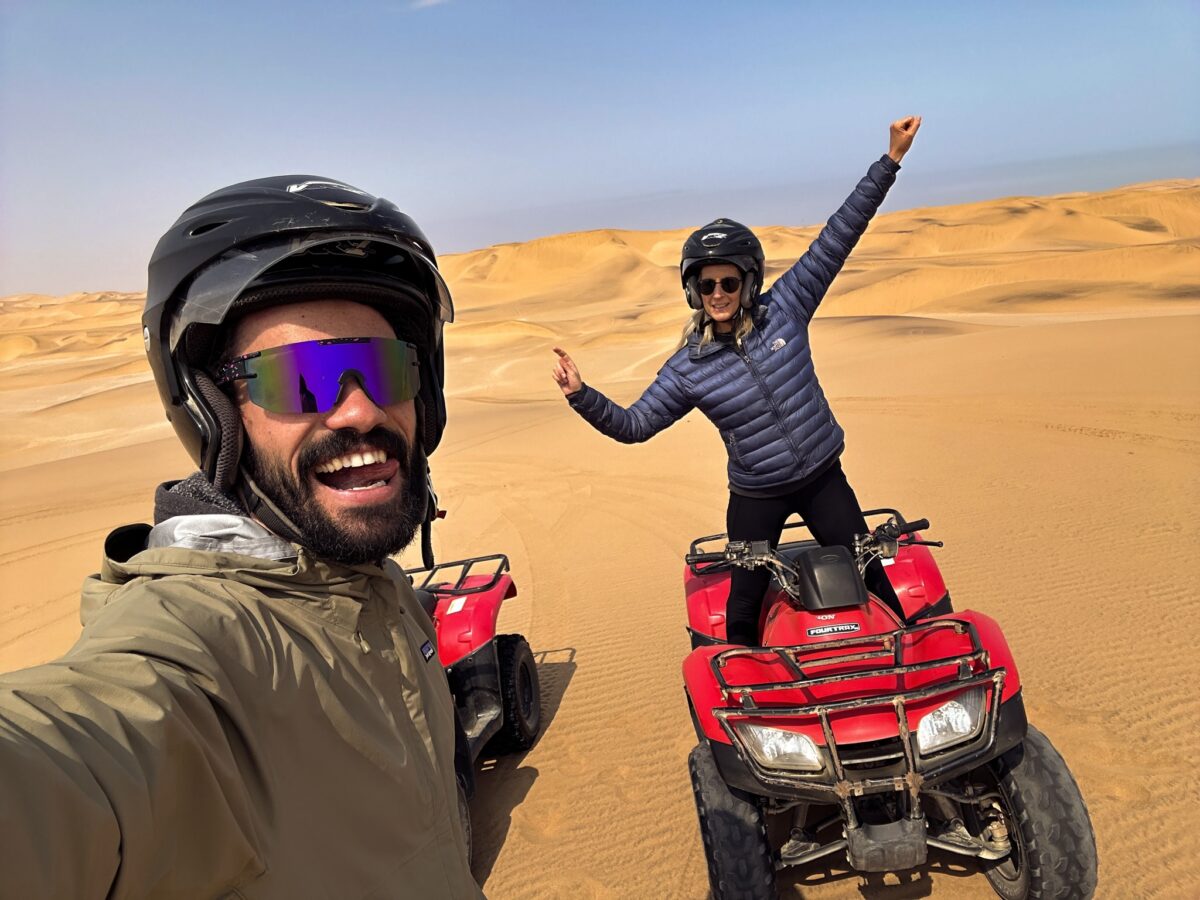
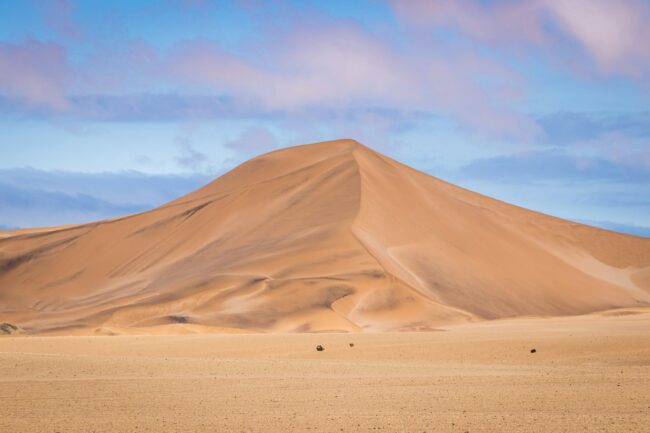
No group timetable, no waiting for the last person at breakfast. If the light is good at Dune 45, stay. If you want a second coffee in Solitaire, have it. The only fixed points in your day are the ones you booked.
- It’s just your party.
Between 2 and 4 people in one vehicle, and they’re all people you chose. No shared truck, no small talk with strangers at dinner unless you feel like it.
- You’re guided where it actually counts.
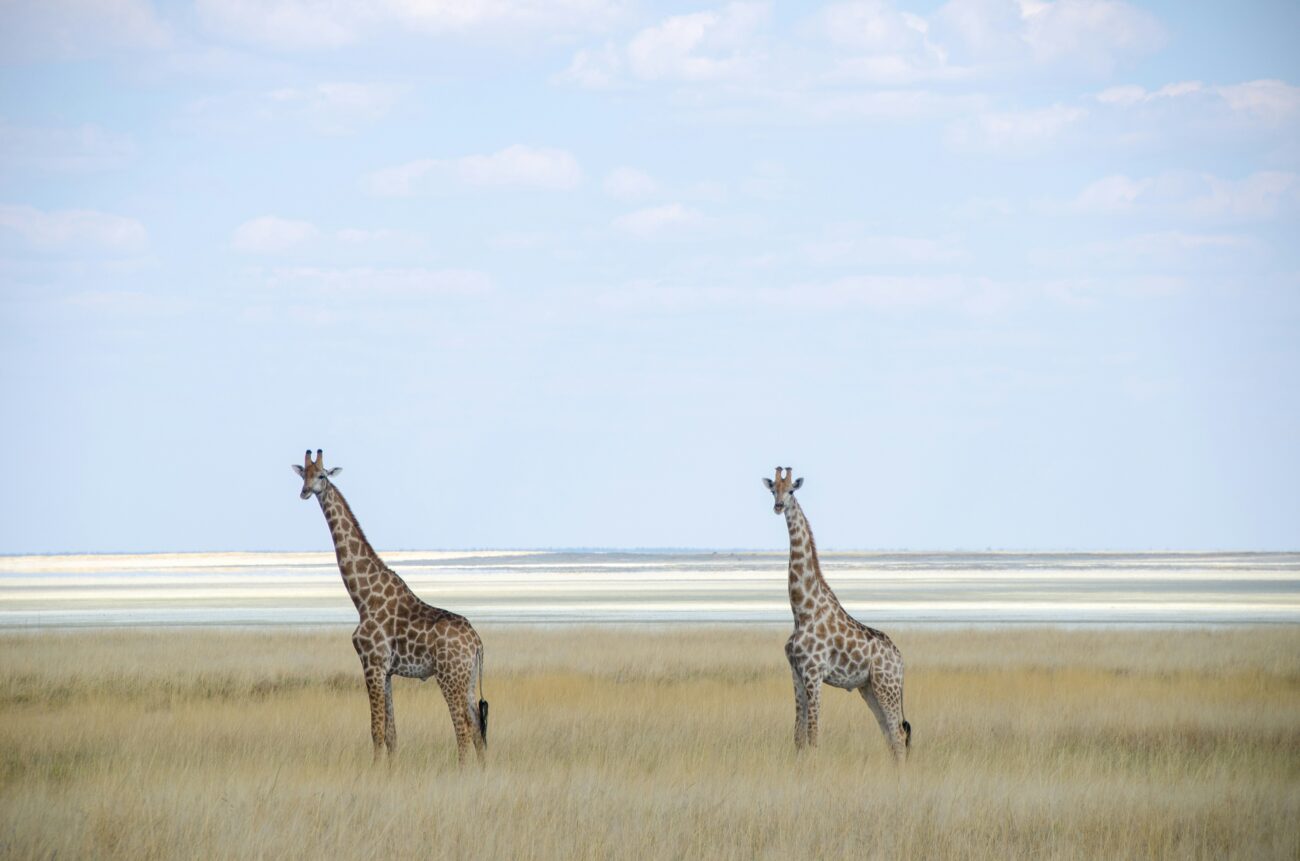
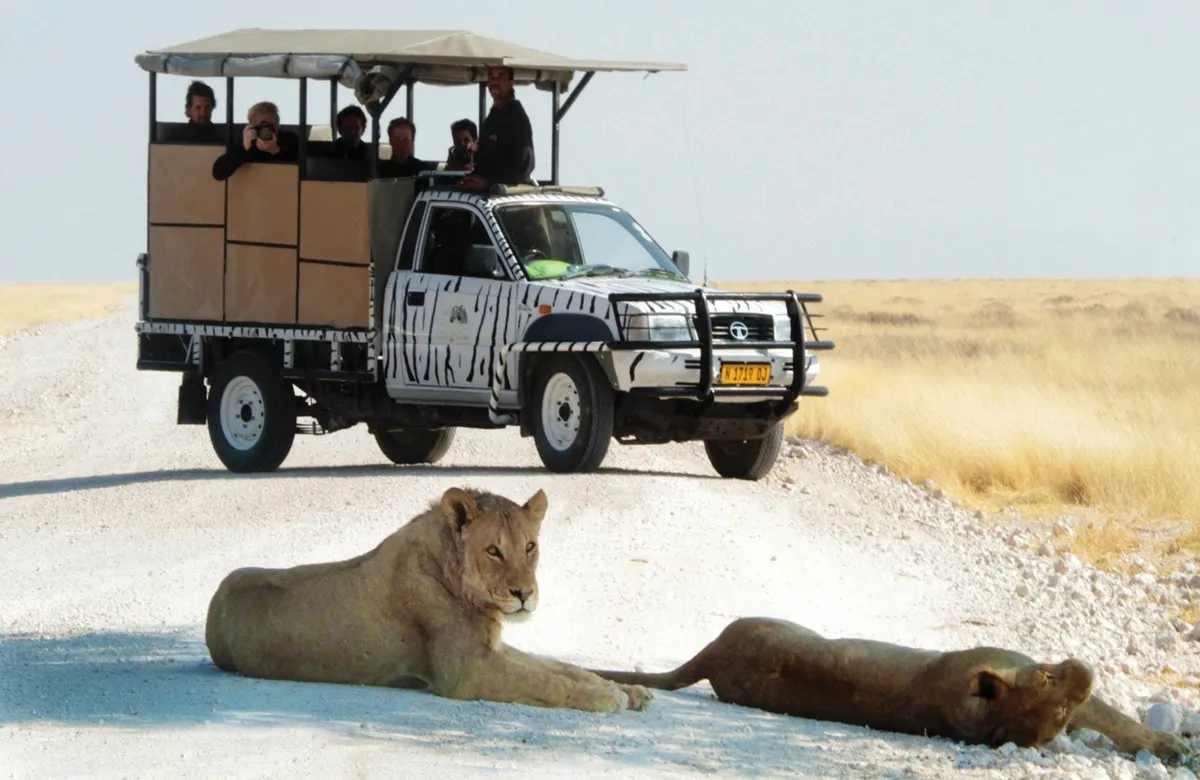
This is the part most people don’t expect. You’re not on your own for the important bits. For eg. a guided desert walk with Sossus on Foot, and a full day in the park in an open 4×4 with a guide who knows where the animals are. You get local expertise on the days that need it, and your own company on the days that don’t.
- You’re not paying for a guide you don’t need.
On a fully guided private tour you carry the cost of a guide and vehicle every single day, including the long transfer days when there’s nothing to interpret. Self-drive strips that out and puts guides only where they add something. It’s the same route, the same lodges, noticeably less money.
- No 4×4 required, and no 4×4 price tag.
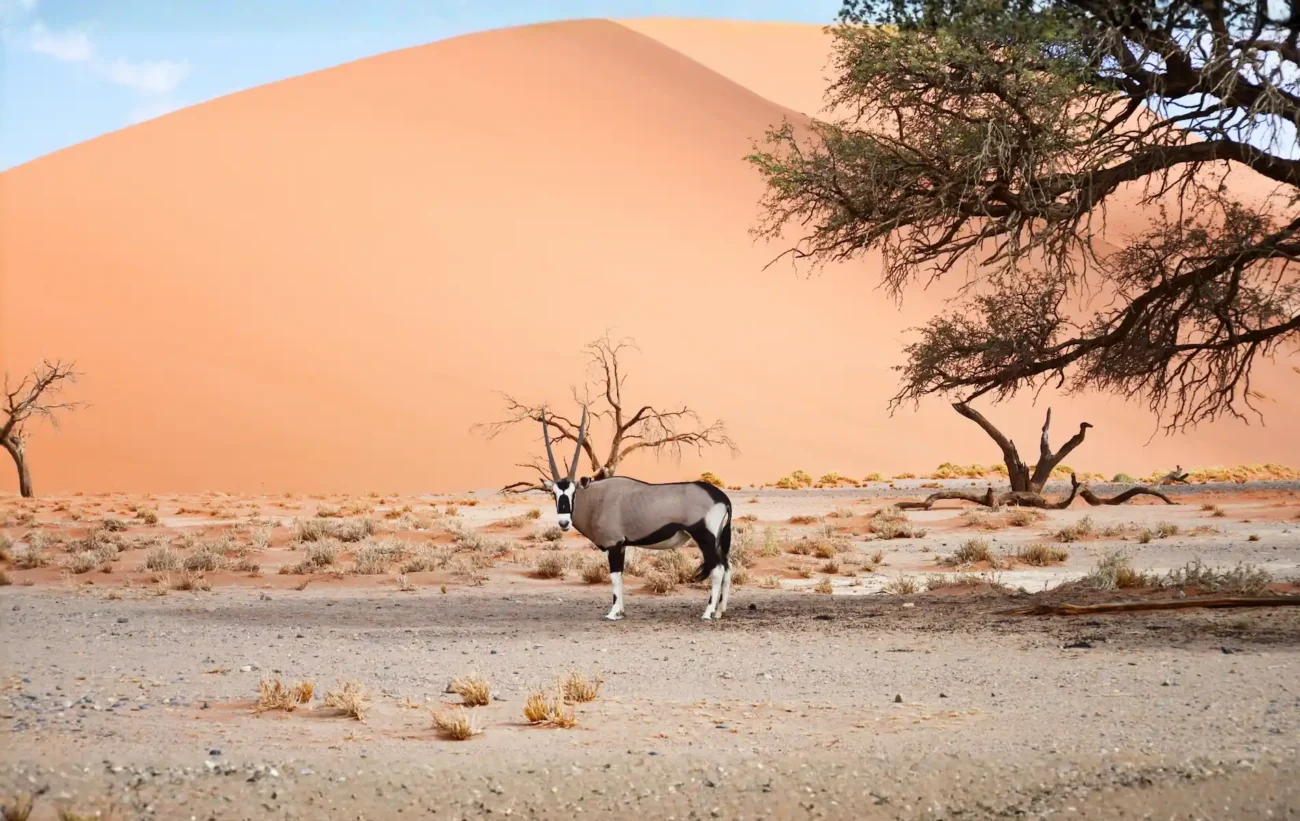
Namibia’s main gravel roads are well maintained, and this route runs comfortably in a two-wheel drive. Where a 4×4 is genuinely needed — the sand road into Deadvlei, the Etosha game drives — it’s provided and included. A lot of operators will hire you a 4×4 for this itinerary. You don’t need one.
- Namibia is the easiest place in Africa to try this.
Low traffic, good roads, clear signage, English widely spoken, and you drive on the left. If you’ve ever thought about a self-drive in Africa but weren’t sure where to start, this is where you start.
- You’re never actually alone out there.
Roadside assistance comes with the vehicle, and our team in Africa is on WhatsApp and the phone if anything goes sideways. That’s the difference between a self-drive tour and simply hiring a car.
- It suits families particularly well.
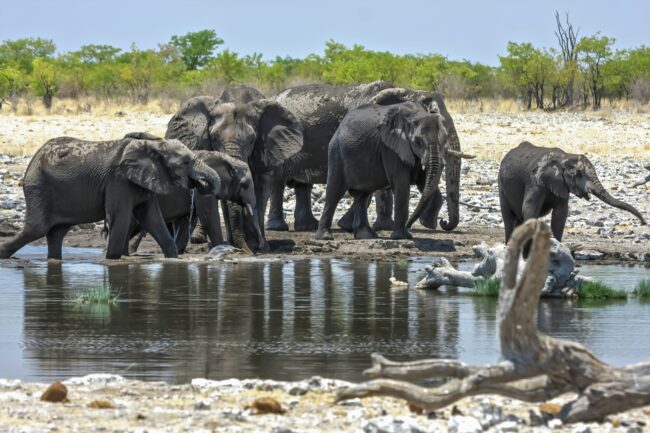
Having your own vehicle means you travel on your family’s schedule — snack stops, quiet time, an unscheduled hour at a waterhole — rather than someone else’s.
Pre & Post Tour Accommodation
Detour Africa is here to arrange a seamless experience, including pre and post-tour accommodation, as well as convenient airport transfers. Please ask your consultant for assistance.
Passport & Visa Requirements
PASSPORT
Ensure your passport has sufficient pages for all required visas, with a minimum of 2 clear pages for each country you’ll be visiting. Note that South Africa requires 2 clear pages upon entry, especially crucial if you plan to fly home from South Africa after touring multiple African countries.
Additionally, ensure that your passport is valid for at least six months after your departure date from Africa. It’s wise to keep a copy at home or with friends. Consider taking a photo of your passport and its contents, and emailing it to yourself for added security.
Using more than one passport (to avoid visa payments) is not advisable. For example, when entering Namibia, the immigration official must see the exit stamp for South Africa in the same passport for entry clearance.
VISA REQUIREMENTS
It is your responsibility to secure any necessary visas for your upcoming trip. Visa requirements differ based on your nationality and destination so please contact the various embassies or visa service agencies to check visa requirements. We also advise that you recheck visa requirements at least four weeks before departing for your tour as regulations can change.
Detour Africa will not be held responsible for clients being denied entry should they not be in possession of the relevant visas.
Ensure a smooth journey by having a valid onward or return flight or proof of alternative transportation to depart from the country where your tour ends. Alternatively, show proof of sufficient funds, such as a credit card, enabling you to purchase an air ticket for your departure.
Here is a useful link to check your visa requirements. Travel Visa Checker
These are subject to updates and may vary based on your nationality so please double check this info directly with the embassies for each country.
Important Notice:
New Visa Requirements for Namibia (Effective April 1, 2025)
From April 1, 2025, Namibia will require visas for travelers from over 31 countries that do not offer visa-free entry to Namibian citizens. This includes nationals from the United States, United Kingdom, Germany, Austria, Belgium, Italy, the Netherlands, and Switzerland. Visas will be issued on arrival, with fees set at N$1,600 (approximately €80) for travelers from non-African Union (AU) countries and N$1,200 for AU member states.
Disclaimer: This information is for general guidance only. Visa regulations are subject to change, and we recommend confirming details directly with the Namibian embassy or consulate in your country.
Medical & Health Requirements
VACCINATIONS
To ensure a healthy and worry-free adventure, we recommend considering the following vaccinations for your journey through Africa: Hepatitis A (Havrax), Cholera, Tetanus Booster Shot, and Rabies.
It is crucial to note that this is only a general recommendation. For the most accurate and up-to-date vaccination requirements, we strongly advise consulting with your doctor or a travel clinic. They can provide personalized guidance based on your health history, ensuring you receive the most relevant and current information to stay protected during your travels. Your well-being is our priority, and we want you to embark on your African adventure fully prepared and in good health.
DO YOU NEED A YELLOW FEVER CERTIFICATE FOR NAMIBIA?
For most travellers, no. There is no yellow fever risk in Namibia, and no vaccination is required if you’re flying in directly from the UK, Europe, North America, South Africa, Australia or New Zealand.
Namibia only requires a valid yellow fever certificate from travellers aged 9 months and older in two situations:
- You’re arriving from a country with a risk of yellow fever transmission
- You’ve transited for more than 12 hours through an airport in a country with yellow fever risk
IS THERE MALARIA ON THIS NAMIBIA ROUTE?
Only in one part of it.
The Namib Desert and the coast are regarded as almost risk-free, so your nights at Sesriem and Swakopmund carry no real concern. Northern Namibia is different — Etosha carries a medium risk, and it’s seasonal, peaking in the rainy months from November to April. In the dry winter months, risk in the area is considered negligible.
That means four of your six nights are in low-risk territory, and the two at Etosha depend largely on when you travel.
We recommend that you speak to your doctor or travel clinic with your actual travel dates in hand.
Whether or not you take antimalarials, the simple precautions matter at Etosha: a DEET-based repellent, long sleeves and trousers at dusk and after dark, and windows closed or nets down at night.
If you are prescribed antimalarial tablets, take them exactly as directed — including the doses before you arrive and after you get home. They’re preventive, and they only work if you finish the course.
This guidance is general and can’t replace a consultation with your doctor or travel clinic. Last updated: 4 Sept 2026
Insurance
Medical insurance is a mandatory requirement. Your guide will request your policy number before the tour begins so please keep your insurance details handy when starting your tour. Ensure that your travel and medical insurance covers both cancellation and emergency evacuation in case of serious illness or injury, especially considering our tours often venture far from well-equipped hospital facilities. It’s important to note that credit card insurance might not offer sufficient coverage, so we strongly recommend obtaining a separate travel insurance policy for comprehensive protection.
Many of our customers opt for World Nomads Travel Insurance and highly recommend their services. While we’re not directly affiliated with World Nomads, we do encourage you to explore their offerings to secure a reliable insurance solution for your journey.
What to Pack
Please be advised that Africa experiences varying weather patterns, and conditions on your tour may differ. It’s important to check and monitor the specific weather for your destination, as temperature shifts can be significant.
Early morning and late evening game drives may be chilly during certain times of the year. Most excursions take place in open 4×4 safari vehicles for extended periods, potentially the entire day. Considering this, it’s recommended to have clothing that provides protection against wind chill and keeps you warm.
Opt for clothing that is easy to wash and dry, and preferably doesn’t require ironing. Avoid synthetics, which can be uncomfortable in hot weather.
Here are some suggested items to pack for all weather conditions:
- Shorts or a skirt
- Tracksuit or pullover for comfort
- Long pants or jeans
- Comfortable walking shoes, boots, or trainers
- Sandals
- 2 or 3 T-shirts
- 1 or 2 Long Sleeve Shirts
- Swimwear
- Underwear
- Socks
- Hat or Cap
- Waterproof Jacket or Raincoat for unexpected showers depending on season
- Kikoi or sarong for versatility
- Beanie and gloves for winter travels
Additional suggested items for your packing list:
- Wet wipes
- Toiletries
- Torch with ample spare batteries
- Camera with extra batteries and memory cards
- Reusable water bottle
- Insect and mosquito repellent
- Suntan lotion, sunblock, and after-sun lotion
- Sunglasses
- If you wear glasses or contact lenses, it’s advisable to bring a spare pair.
- USD cash for tips and souvenirs
- Small basic First Aid kit including painkillers, band-aids, after-sun lotion, eye drops, and anti-diarrheal tablets.
Meals & Drinking Water
MEALS
Please refer to your tour itinerary for details on what meals are included on your tour.
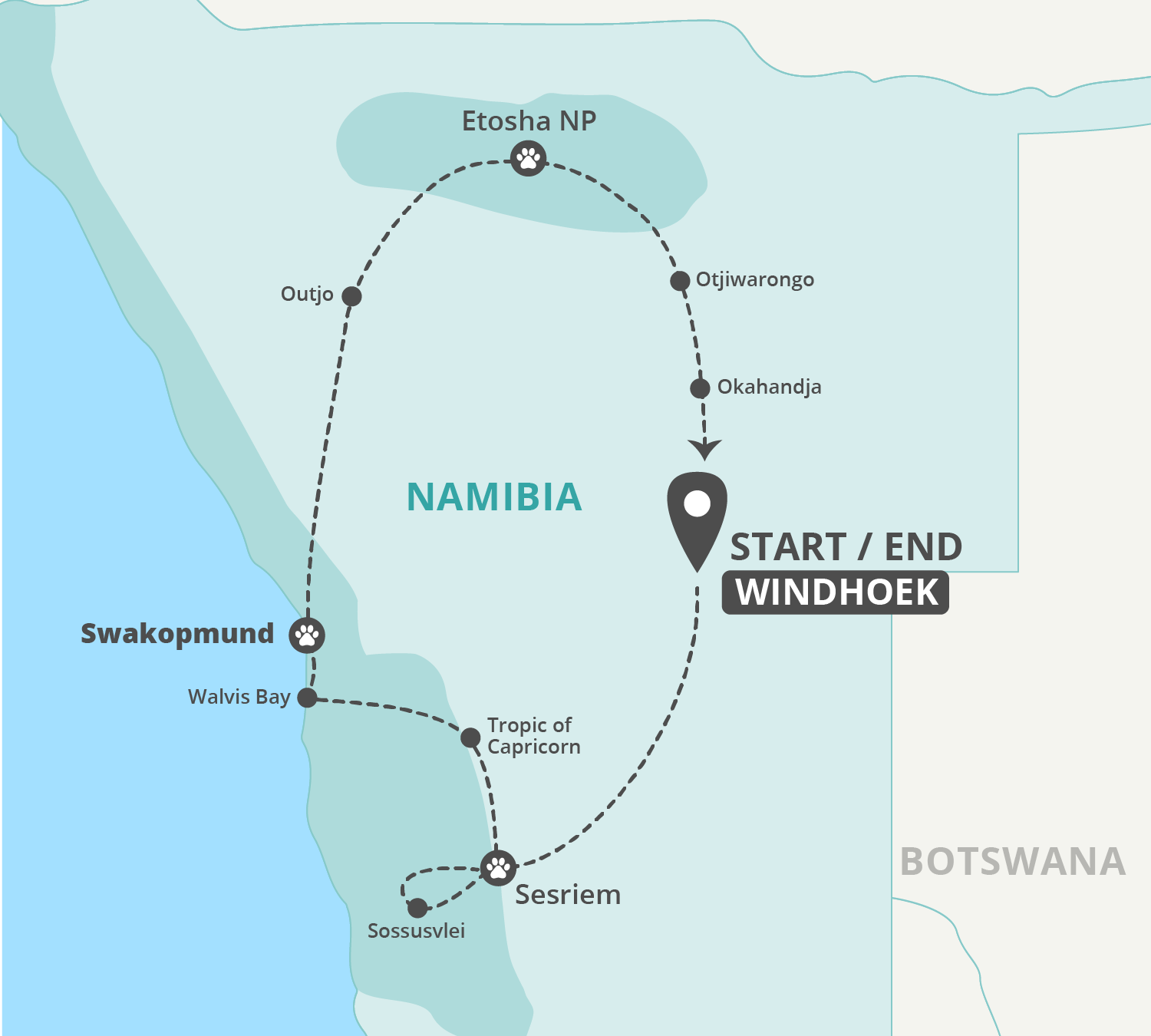
Lunches aren’t included, which suits a self-drive week rather nicely — you eat where and when you feel like it. Solitaire, Walvis Bay and Swakopmund all reward the stop.
Please let your consultant know about any dietary requirements when you book rather than on arrival — the lodges need notice.
DRINKING WATER
Tap water in Namibian towns and lodges is generally safe, but the mineral content differs from what you’re used to and can unsettle a stomach for a day. Bottled water is widely available.
The more important point is quantity. It’s a dry country and you’ll be out in it — two litres a day is the baseline, and the dune days ask for more. Keep a full bottle in the car at all times.
Driving in Namibia
Easier than most people expect, with a few things worth knowing.
WHICH SIDE OF THE ROAD?
You drive on the left, the same as South Africa and the UK.
GRAVEL ROADS
Most of your week is on gravel, and it’s good gravel — but it rewards patience.
Stay at 80 km/h or below, whatever the sign says. Nearly every hire car incident in Namibia comes down to speed on a loose surface.
Brake and steer gently. Slow right down and move left for oncoming traffic. A stone through the windscreen is the most common thing that goes wrong out here. On corrugated sections, a steady moderate speed is far more comfortable than trying to outrun it.
DRIVING AFTER DARK
Please don’t. Kudu, warthog and livestock come onto the roads at dusk, and much of the route runs alongside unfenced farmland. Plan each leg to arrive before sunset and it simply never becomes an issue.
Money & Currencies
Money can significantly impact your tour experience, so it’s essential to budget wisely. Africa isn’t known for being inexpensive, so prudent spending is key.
CASH
Carry more than you’d expect to.
Namibian Dollars and South African Rand both work — the two currencies are pegged 1:1 and Rand is accepted throughout Namibia. Namibian Dollars aren’t accepted back in South Africa, so spend them before you fly home.
CREDIT CARD
Cards are fine at lodges, restaurants and shops in Windhoek and Swakopmund. Visa and Mastercard are widely accepted; Diners and Amex less so. ATMs are easy to find in the main towns. Let your bank know you’re travelling so your card doesn’t get blocked.
TIPPING
Tipping is customary but never obligatory. Around 10% in restaurants for good service. Petrol attendants pump your fuel, check your oil and clean your windscreen — N$10 to N$20 is a normal thank you. For your Etosha guides, something in the region of US$5 to US$10 per person per day is a kind gesture if they’ve made your day.
Travelling with Children
Certain African countries require travelers entering or leaving the country with a minor (under the age of 18) to present an unabridged birth certificate that includes details of both parents. In some cases, if a child is traveling with only one parent or without both parents, additional documentation such as a parental consent affidavit may be required. This affidavit typically needs to be notarized. Travel regulations, including those related to documentation for minors, can change. Governments periodically review and update their travel policies, so it’s crucial to check with the relevant embassies, consulates, or official government websites for the most current information.
Wi-Fi Access
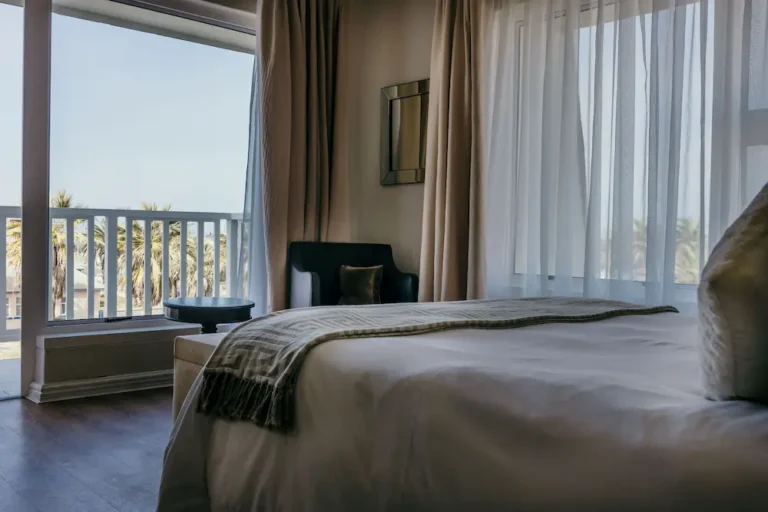
Artemis Hotel in Swakopmund has high-speed Wi-Fi. At Sesriem and Etosha, connectivity is limited or paid.
Between towns there are long stretches with no signal at all. Download your maps offline before you leave Windhoek rather than relying on live navigation, and pick up a local SIM at the airport if you’d like to stay reachable.