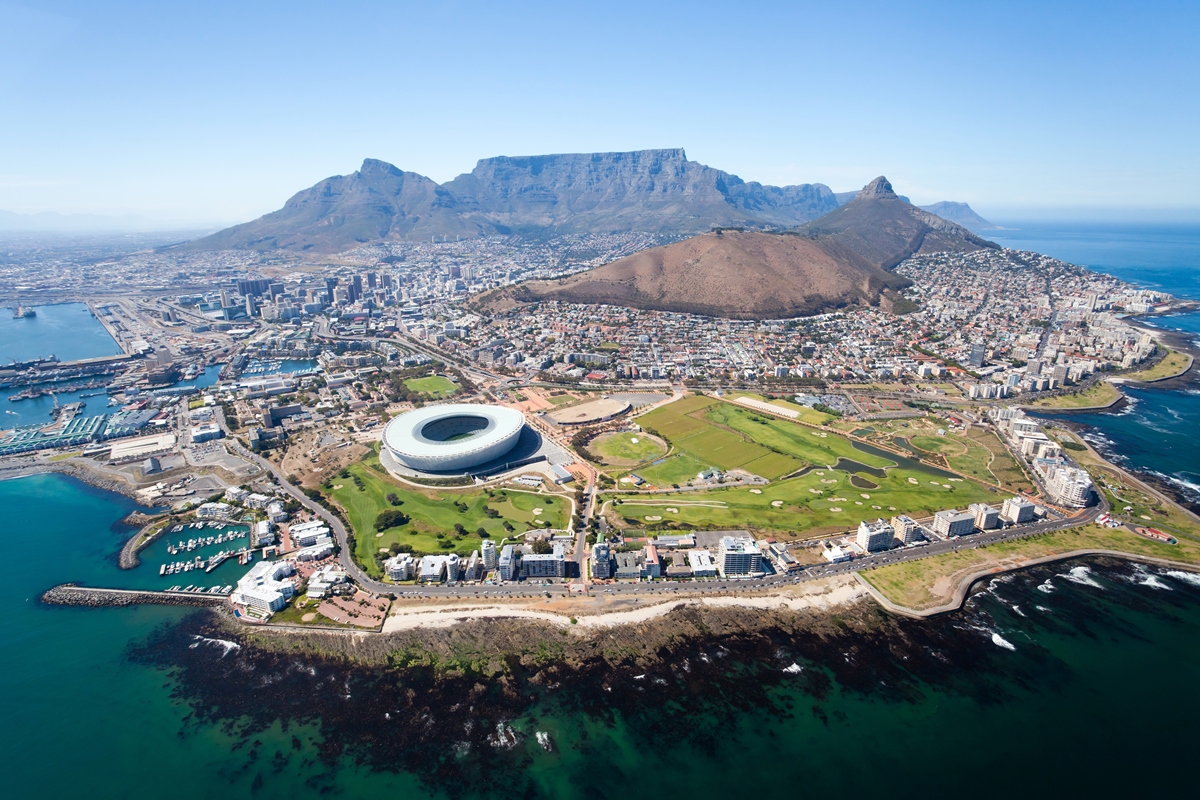
Cape Town Tours
Day trips, wine routes and Big 5 safaris — all within easy reach of the city.
Plan My TripWhy Visit Cape Town?
- Cape Town has it all. Table Mountain, the penguins at Boulders, the wine farms around Stellenbosch. All of it sits inside a two-hour drive of the city.
- The Big 5 are two hours away. There are private reserves near enough to do as a day trip, so a safari doesn’t cost you an internal flight or a day of your itinerary.
- Getting here is easy. London is an overnight flight. Frankfurt and Munich are much the same. From the US and Australia you’ll change once, usually in Johannesburg or the Gulf.
- Your money goes further here. A good dinner with a bottle of Stellenbosch red costs a fraction of what the same evening runs in Sydney or on the Med.
We run scheduled small group day tours here as well as private ones. The group tours are better value and handle the practical side well. Private suits families, anyone who wants to set their own pace, or travellers with something specific in mind. Same guides either way, same vehicles.
Plan Your Cape Town Trip
Tell us what you're after. We'll do the rest.
8 Day Cape Town to Garden Route & Kruger Comfort Tour
12 Day Kruger, Garden Route & Cape Town Comfort Tour
6 Day Garden Route Tour – Gqeberha to Cape Town
11 Day Namibia Adventure – Windhoek to Cape Town Camping Tour
11 Day Best of Namibia Tour – Windhoek to Cape Town Tour
Best Time to Visit Cape Town
Cape Town has a Mediterranean climate. Summers are dry and winters are wet, which is the reverse of most of Southern Africa. If you’re pairing the city with a safari, the two halves of your trip want different months.
There’s no single best month here. It comes down to whether you want the summer buzz, the space and value of the shoulder months, or the whales.
- JAN
- FEB
- MAR
- APR
- MAY
- JUN
- JUL
- AUG
- SEP
- OCT
- NOV
- DEC
Low Season
Jun - Aug
Winter, and the wettest stretch of the year. June and July average around 112 mm and 103 mm, with daytime highs near 15 °C. It does rain. It rarely rains for days on end, though. Fronts come through, and between them you get clear, crisp weather.
This is also whale season. Southern right whales arrive off Hermanus and Walker Bay from around June, calve in August and September, then peak in October when the males come in. The city is at its quietest and cheapest now, and the countryside around it is green instead of the summer brown.
Shoulder Season
Mar - May & Sept - Nov
If the summer crowds aren’t what you’re after, this is your window. March and April hold onto the warmth once the city has emptied out, and they land in the middle of the wine harvest, which runs from roughly February through April.
September to November brings wildflowers, calmer seas and the back end of the whale season. Both windows give you comfortable weather for walking and noticeably better rates.
You’re trading a little of the summer heat and those long evenings for space and value. It’s also the smarter choice if you’re pairing Cape Town with a safari, because April, May, September and October work well up in Kruger too.
Peak Season
Dec - Feb
Summer, and Cape Town at its best. Long warm days in the mid twenties to thirties, almost no rain, and daylight lasting well past eight in the evening. The beaches at Clifton and Camps Bay fill up, the outdoor markets and music start, and the winelands are at their most inviting. There’s a real energy to the city over these months and it’s easy to see why people come back.
It’s the busiest season, so book ahead. Rooms cost more, the good restaurants need reserving, and December fills up months in advance.
One local tip. The south-easterly wind, the Cape Doctor, blows through summer. It keeps the air clear, and on its strongest days it closes the cableway — so go up Table Mountain on the first clear morning you get rather than saving it for the end of your trip.
Cape Town Travel FAQs
Is Cape Town safe for tourists?
Yes, with the same city sense you’d use anywhere. The areas visitors spend time in — the Waterfront, Camps Bay, Constantia, the winelands, Table Mountain — are well policed and busy. As in any big city, keeping an eye on your belongings is the main thing.
Here’s what we tell every client.
- Use ride-hailing apps like Uber or arranged transfers after dark instead of walking.
- Leave nothing visible in a parked car.
- Keep your phone in your pocket in the city centre.
- Don’t hike Table Mountain alone, go with a group or a guide.
- And if you want to see a township, go with an organised tour rather than driving in yourself.
None of this should put you off. Take the same sensible precautions you would in London, New York or Sydney and you’ll be fine. Cape Town welcomes a huge number of international visitors every year and the vast majority never have a moment’s trouble.
When is the best time to visit Cape Town?
For weather, December to March. For value and less crowds, March to May or September to November. For whales, June to November, with October the peak.
If you’re adding a safari elsewhere in South Africa, the seasons pull against each other. Cape Town is at its best in summer. Kruger game viewing is at its best in the dry winter months from May to September. April, May, September and October sit in the middle and work well for both, which is why so many of our combined itineraries land there.
How many days do I need in Cape Town?
Three days covers the essentials: Table Mountain, the Peninsula and a day in the winelands.
Five gives you room for whale watching or a day safari, plus a buffer for weather. That buffer matters more than people expect, because the cableway closes in high wind and you don’t want your only chance at Table Mountain falling on a windy Tuesday.
Most of our clients spend four or five nights here as part of a longer South Africa trip.
Can you go on safari from Cape Town?
Yes. There are Big 5 reserves within driving distance running daily game drives, and we offer both 1 day wildlife and 2 day wildlife safaris from the city. A full day starts from around USD 145 and the two-day option from USD 240 per person.
These safaris are perfect if you’ve only got a day or two in Cape Town and want to see animals, these reserves do the job beautifully. The game viewing is close-up and you’re back in the city the same evening.
If your trip allows more time, fly up to Kruger. It’s a completely different experience — a proper African safari in a park the size of a small country. Give it three days at minimum, ideally more.
How much does a Cape Town tour cost?
Full day tours start from approx. USD 60, with most sitting between approx. USD 105 and USD 145 per person.
A full day on the Cape Peninsula is approx. USD 134. Whale watching is approx. USD 107. A winelands day with tastings comes in around approx. USD 124, and shark cage diving at approx. USD 226.
Multi-day trips such as Cape Agulhas or a wildlife safari start from approx. USD 240. Private tours are priced per group rather than per person, so they get better value the more of you there are.
Entry fees for Table Mountain, Cape Point and Boulders Beach usually aren’t included in day tour prices. Ask us and we’ll confirm exactly what’s covered on the tour you’re looking at.
What does it cost to go up Table Mountain?
A return adult cableway ticket is roughly USD 29 to USD 33.
Children aged 4 to 17 pay USD 14 online and under 4s go free.
Book online if you can. Those tickets stay valid for seven days from the date you choose, which gives you flexibility when the wind closes the cableway.
One thing to watch: the cableway shuts for around two weeks of maintenance in late July or early August each year. Check the dates before you build your itinerary around it.
Do I need a visa for South Africa?
Not if you hold an ordinary UK, US, Australian, German, Irish, Canadian or New Zealand passport. You get 90 days visa-free on arrival.
Two things catch people out. Your passport has to be valid for at least 30 days after you leave South Africa. And you need two completely blank consecutive visa pages on arrival, with endorsement pages not counting towards them. People have been refused entry over the blank pages. Check yours before you fly.
Visa rules and fees change without notice and differ depending on your passport. Please confirm with the official immigration authority for your nationality before booking flights.
How long is the flight to Cape Town?
From London it’s around 11 to 12 hours direct, usually overnight.
From the US East Coast, 15 to 18 hours with one stop.
From Sydney or Melbourne, 18 to 22 hours routing through Johannesburg, Perth or the Middle East.
From Frankfurt or Munich, around 11 to 12 hours direct or one-stop.
South Africa runs on UTC+2. That’s one or two hours ahead of the UK depending on the season, and the same time as most of Central Europe, so German travellers arrive with no jet lag at all.
When can I see whales in Cape Town?
Southern right whales are in the bays from around June to November. They come up from Antarctica in June, calve in August and September, and numbers peak in October when the males arrive to mate.
Sightings in July and August vary from year to year. From September through November they’re close to guaranteed. Hermanus and Walker Bay, about 90 minutes out of the city, offer the best land-based whale watching in the country.
Our Full Day Whale Watching Tour runs from Cape Town and returns the same day, from approx. USD 107. Tell us your dates and we’ll let you know what the sightings have been like.
What should I pack for Cape Town?
Layers, whatever the season. The gap between a windy Cape Point morning and a still Stellenbosch afternoon is bigger than you’d think, and Table Mountain is always colder and windier than the city below it.
Bring a windproof jacket year-round, shoes you can walk in, sunscreen and sunglasses. The UV is high here even on cool days. Add swimwear in summer and a proper waterproof in winter. Cape Town is relaxed about dress and smart casual gets you into almost every restaurant in the city.
Do I need a car in Cape Town?
Not if you’re doing guided day tours. Transport is included on all of them.
If you’d rather explore independently, a hire car makes the Peninsula and the winelands easier, and remember that driving is on the left.
Guided tours and ride-hailing apps cover the city comfortably, and on the Peninsula a guide who reads the weather and reorders the day accordingly is worth having.
Is Cape Town malaria-free?
Yes. Cape Town and the whole Western Cape sit outside South Africa’s malaria risk areas, so no prophylactics are needed here or in the winelands.
If you’re combining Cape Town with Kruger, that leg is different. Kruger does fall inside the malaria area, so ask your doctor about it specifically.
What Our Travellers Say
A Great Experience
My family and I had a great experience in South Africa with the help of Detour Africa. We did a safari and a Cape Town family tour. We enjoyed both activities a lot. The city tour, in particular, was wonderful because our guide, James, knows a lot about what he shows you in the tour, in addition to being a very pleasant person.
Smooth and Fantastic
We would like to thank Detour Africa for the wonderful organization of our trip. Everything went smoothly (the connections, the tours, the accommodations...) and we truly enjoyed the whole experience. their indications were clear and we followed them during the whole trip. We were lucky to see the Big Five (even the solitary leopard, from far), and the safaris were amazing. Cape Town was also a highlight: a great group, a friendly and professional guide, and stunning destinations.
We did the Cape Winelands Tour
Booking through Detour Africa was a hassle free experience and they corresponded with me quickly and answered all questions that I put to them. The tour operated they used was fantastic and our guide/driver, Bruce, for the day was great - knowledgeable, engaging, ensured that our experience exceeded expectations and he even went beyond expectations when we lost our mobile phone and he tracked it down and returned it to us the next day. Couldn't have been happier or more relieved.