Namibia Tours & Safaris
From the ancient dunes of Sossusvlei to wildlife safaris in Etosha
Plan My TripWhy Visit Namibia?
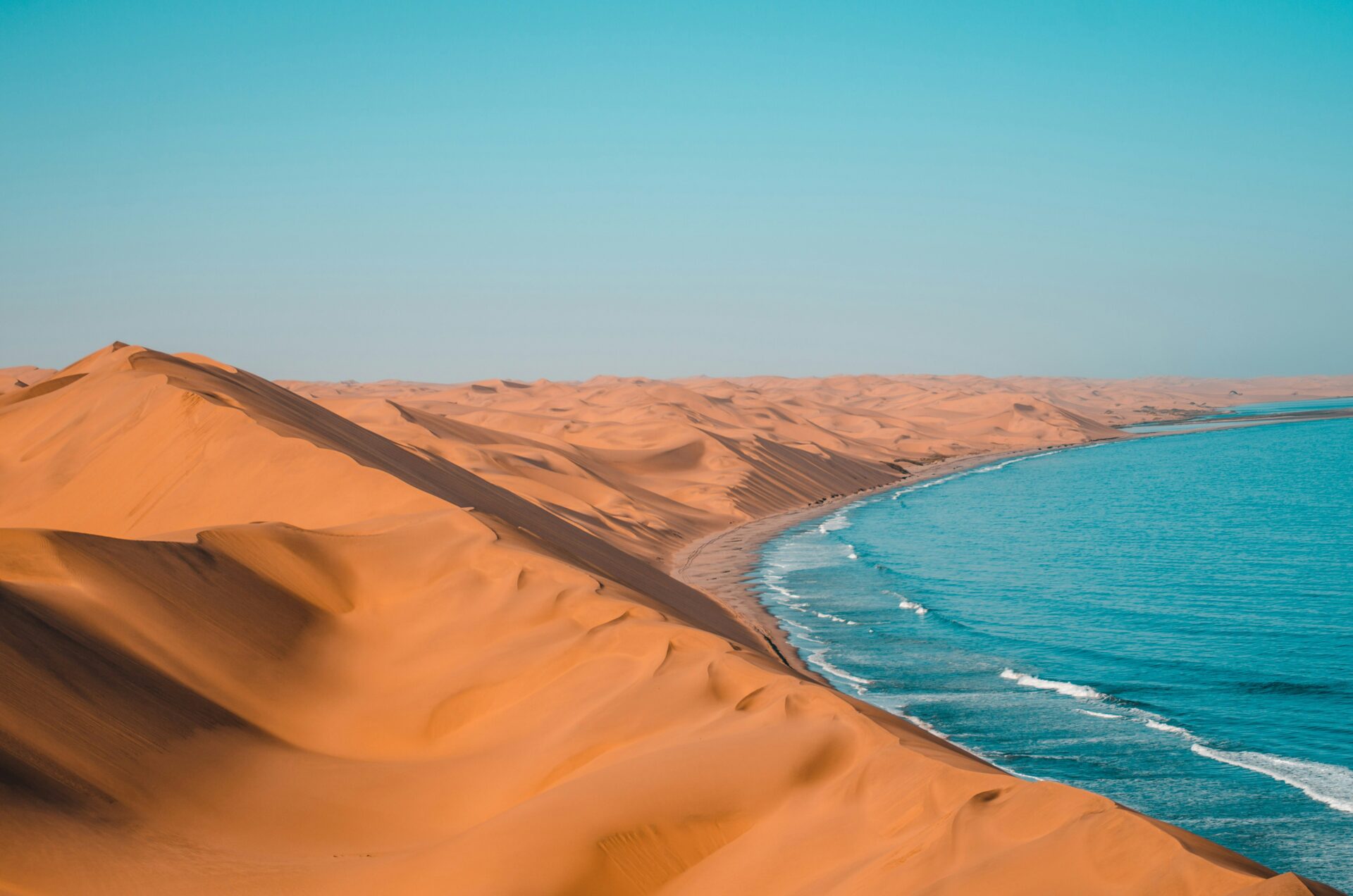
Namibia is unlike anywhere else in Africa. It’s a land of dramatic contrasts — from the towering dunes of the Namib Desert to the open plains of Etosha National Park where elephants and lions gather at waterholes. You’ll find raw, rugged beauty, incredible wildlife, and some of the most striking landscapes on the continent. What makes Namibia special isn’t just the scenery — it’s the space. Roads stretch for miles with hardly another car in sight. The skies are endlessly wide. And at night, the stars feel close enough to touch.
Whether you’re looking for a self-drive safari, camping adventure or a small group lodge safari starting from Cape Town — we’ve got the right Namibia tour for you.
Where to Go in Namibia
Plan Your Namibia Trip
Tell us what you're after. We'll do the rest.
10 Day Namibia and Botswana Small Group Tour
6 Day Namibia Highlights Budget Adventure Tour
12 Day Etosha & Okavango Delta Adventure Tour
11 Day Best of Namibia Tour – Windhoek to Cape Town Tour
Best Time to Visit Namibia
Namibia is a year-round destination but each season offers something different. Here’s what to expect in each season.
- JAN
- FEB
- MAR
- APR
- MAY
- JUN
- JUL
- AUG
- SEP
- OCT
- NOV
- DEC
Low Season
Dec - Mar
Namibia’s summer rains arrive during these months, mostly as afternoon thunderstorms. The landscape turns green, and birdlife is at its best.
However, wildlife can be harder to spot as animals spread out. Expect hot and humid conditions — daytime temperatures often reach 35–40°C in some areas, especially in the south and Etosha region. While game viewing is more challenging, this season offers lush scenery and dramatic skies.
Shoulder Season
Apr - May & Nov
April and May follow the summer rains, bringing cooler mornings, green landscapes, and clear skies — great for photography and general touring. Temperatures range between 25–30°C during the day, with comfortable nights.
November is hotter (30–35°C), especially in the north and central areas, and marks the start of the rainy season.
These months offer fewer crowds and good value for money, especially for lodge tours and longer overland trips.
Peak Season
Jun - Oct
These are the dry winter months — perfect for safaris, especially in Etosha. With no rain and limited water sources, animals gather at waterholes, making them easier to spot. Days are sunny and mild, while nights can be very cold, especially in the desert.
This is the most popular time to visit Namibia, so early bookings are recommended for tours and accommodation.
Namibia Travel FAQs
When is the best time to visit Namibia?
The best time to visit Namibia is during the dry season, from June to October. During these months, vegetation is sparse, temperatures are more manageable, and wildlife congregates around waterholes in Etosha National Park, making game viewing far more predictable.
June to August are peak months for wildlife sightings. The dry season is also the best time to explore Sossusvlei’s red sand dunes, as cooler mornings make the dune climb more comfortable.
November to April is the green season — rain transforms the landscape, birdlife is exceptional, and tour prices are generally lower. The Kalahari region in the south and Fish River Canyon can be visited year-round, though summer temperatures can exceed 40°C.
Do I need a visa to visit Namibia?
As of April 2025, most international visitors — including nationals from the UK, USA, Canada, and EU member states — are required to obtain a visa to enter Namibia. Visitors can apply online through the official Namibian eVisa portal or obtain a visa on arrival at select entry points including Hosea Kutako International Airport in Windhoek.
The visa fee is approximately N$1,600 (Namibian Dollars). Your passport must be valid for at least six months beyond your travel dates and must contain a minimum of three blank pages.
Visa regulations can change without notice — Detour Africa strongly recommends checking with the Namibian Embassy or the official eVisa portal closest to your departure date before travelling.
Can I combine Sossusvlei and Etosha in one trip?
Yes — combining Sossusvlei and Etosha National Park in a single Namibia itinerary is one of the most popular and rewarding ways to experience the country.
Sossusvlei, in the Namib-Naukluft National Park, offers iconic red sand dunes including Big Daddy (375 metres high) and the hauntingly beautiful Deadvlei salt pan. Etosha, in northern Namibia, is the country’s premier wildlife destination, home to elephant, lion, leopard, rhino, and cheetah. The two parks are approximately 700km apart, making the journey manageable over a multi-day itinerary.
To cover both highlights comfortably, a minimum of 6 to 7 days is recommended. Detour Africa offers combined Sossusvlei and Etosha tours in both camping and lodge-accommodated styles.
What animals will I see in Etosha National Park in Namibia?
Etosha National Park is one of Africa’s great wildlife destinations, home to four of the Big Five — elephant, lion, leopard, and both black and white rhinoceros (buffalo are notably absent). The park’s unique salt pan ecosystem and network of waterholes make wildlife sightings highly reliable, especially during the dry season (June to October) when animals concentrate around permanent water sources.
Beyond the Big Four, visitors commonly see cheetah, spotted hyena, giraffe, plains zebra, blue wildebeest, springbok, oryx, kudu, and eland. The park is also home to the endangered black-faced impala, found almost exclusively in Etosha.
Over 340 bird species have been recorded in the park, including the ostrich, flamingo, and secretary bird.
What should I pack for a Namibia safari?
For a Namibia safari, pack lightweight, neutral-coloured clothing.
Namibia’s desert climate means extreme temperature variation: midday temperatures can exceed 35°C while early mornings and evenings (especially in the desert) can drop below 10°C, so layering is essential.
Bring a wide-brimmed hat, UV-protection sunglasses, SPF 50+ sunscreen, and a DEET-based insect repellent for Etosha and northern regions.
A good camera with a zoom lens (200mm or longer) is recommended for wildlife photography. Binoculars (8×42) are valuable for spotting wildlife at Etosha’s waterholes.
For dune activities at Sossusvlei or Swakopmund, closed-toe shoes are advisable. A headlamp, refillable water bottle, and small daypack complete your kit.
Can I travel Namibia on a budget?
Yes — Namibia is achievable on a budget, particularly with camping-based small group tours.
Detour Africa offers budget safaris that include accommodation in basic lodges or tents, meals prepared by the tour guide or camp cook, and group transport, making it one of the most cost-effective ways to see the country’s highlights including Sossusvlei, Etosha, Swakopmund, and the Skeleton Coast.
Budget tours in Namibia typically start from around USD 700 for 3 days including accommodation, transport, meals, and park fees. Travelling in a small group also allows costs to be shared. For travellers seeking a step up from camping, mid-range lodge tours offer comfortable en-suite accommodation at competitive prices, particularly in the shoulder season (April–May and October–November).
Is Namibia suitable for solo travellers?
Yes — Namibia is an excellent destination for solo travellers and is well set up for those joining small group tours.
Detour Africa’s Namibia tours are structured specifically for solo travellers who want to explore the country safely and sociably, typically travelling in groups of 2 to 12 people. Solo travellers avoid the challenges of self-driving in remote areas and benefit from an experienced guide who manages logistics, park permits, and accommodation.
Where do Namibia tours start from?
Most Namibia tours depart from Windhoek, the capital city, which is served by Hosea Kutako International Airport (WDH) approximately 45km east of the city centre. Windhoek is the main entry point for international flights into Namibia, with connections via Johannesburg (OR Tambo), Frankfurt, and other regional hubs.
Some longer overland tours begin in Cape Town or Johannesburg in South Africa, or in Victoria Falls in Zimbabwe, allowing travellers to combine multiple countries in a single itinerary.
Swakopmund, Namibia’s coastal adventure hub on the Atlantic, is also used as a starting or ending point for certain tours.
Detour Africa offers flexible pick-up and drop-off options depending on your chosen itinerary.
Where can I go quad biking and sandboarding in Namibia?
The best place for quad biking and sandboarding in Namibia is Swakopmund, a historic coastal town situated between the Atlantic Ocean and the Namib Desert on Namibia’s Skeleton Coast.
Swakopmund is widely regarded as Namibia’s adventure capital, offering quad biking across towering desert dunes, sandboarding (both lie-down and stand-up styles) on the slopes of the Namib, as well as skydiving, paragliding, kayaking with seals, and desert quad tours.
The town is a highlight on most Namibia itineraries and is typically included as a 1 to 2 night stop. Swakopmund is approximately 360km west of Windhoek and is easily reached via Walvis Bay Airport about 30 min away. It is also a convenient base for visiting the Walvis Bay lagoon and its famous flamingo population.
What's the best way to see Namibia's dunes, and how many days should I plan for?
The best way to experience Namibia’s iconic dunes is by visiting Sossusvlei in the Namib-Naukluft National Park, home to some of the world’s tallest sand dunes, reaching heights of up to 375 metres.
The most famous dunes include Big Daddy, Dune 45 (a popular sunrise climb), and the otherworldly Deadvlei clay pan — a striking white salt flat dotted with ancient, blackened camel thorn trees.
The best time to visit is at sunrise, when the dunes glow vivid orange and red in the early light and temperatures are cooler for climbing.
To fully experience Sossusvlei and the surrounding Namib Desert, plan for 2 to 3 dedicated days in the area, as part of a wider Namibia itinerary of 7 to 12 days.
Detour Africa’s 3 Day Sossusvlei Comfort Tour is a popular standalone option for travellers short on time.
Can I do a self-drive trip in Namibia?
Yes, and it’s one of the best countries in Africa to do it. Traffic is light, the main routes are well signposted, English is widely spoken, and you drive on the left as you do in the UK and South Africa. You don’t need special driving experience — just a valid licence and a sensible approach to gravel roads.
The part worth thinking about is the planning. Namibia is vast and thinly populated, distances between lodges are long, and the good properties near Sossusvlei and Etosha book up well ahead. That’s what a self-drive tour solves: you get the freedom of your own vehicle and your own pace, with the route, accommodation, park entries and key excursions already arranged.
Our 7 Day Namibia Self-Drive Safari is the easiest place to start — Sossusvlei, Swakopmund and Etosha over six nights, two nights in each so you’re not driving every day, with guided game drives at Etosha and 24-hour roadside assistance behind you.
If you prefer to have a guide then we recommend our 7 Day Namibia Private Guided Tour. Same route as the self-drive option but you have an expert guide who will lead the way.
How do I book a Namibia tour with Detour Africa?
Booking a Namibia tour with Detour Africa is a simple, secure process. Start by browsing available Namibia tours on the Detour Africa website and selecting a departure date that suits your schedule. A dedicated travel consultant will confirm availability, answer questions about the itinerary, and help you choose the right tour for your budget and travel style. A deposit is required to secure your booking, with the balance due closer to departure.
Payment is processed securely via Flywire, a globally trusted international payment platform, and cryptocurrency payments are also accepted. Detour Africa is a SATSA-accredited operator with over 25 years of experience organising African tours, providing full booking protection, transparent pricing, and 24/7 support from the moment you enquire until the day your trip ends.
What Our Travellers Say
Best decision
I booked the Victoria Falls and Namibia tours with Detour Africa. Exceptional service was provided throughout the booking process by Mandy and her team. Mandy was incredibly patient in answering all my questions and adjusting the travel plans according to my needs. The tours were worth every dollar spent. The attention to detail, food, and activities were all top-tier! I made great memories and I'm already making plans to visit again.
An amazing trip to Namibia
The guide Ivan, and cook John were friendly, professional and knowledgeable. The itinerary included all the highlights of Namibia and the logistics of getting to each place was well planned. Thank you to James at Detour for finding me the perfect trip to work around my plans!
Very helpful when things go wrong
Detour Africa were super helpful when we were planning our trip and provided all the necessary information in good time. What was over and above though was the extra effort they put in to organise things for us when flight delays meant we arrived in Namibia 24 hours later then planned and missed the start of our tour. We can't thank Mandy enough for the personal attention she took to help us out.